
Routing as a service: your routes, planned every morning by NT’s desk.
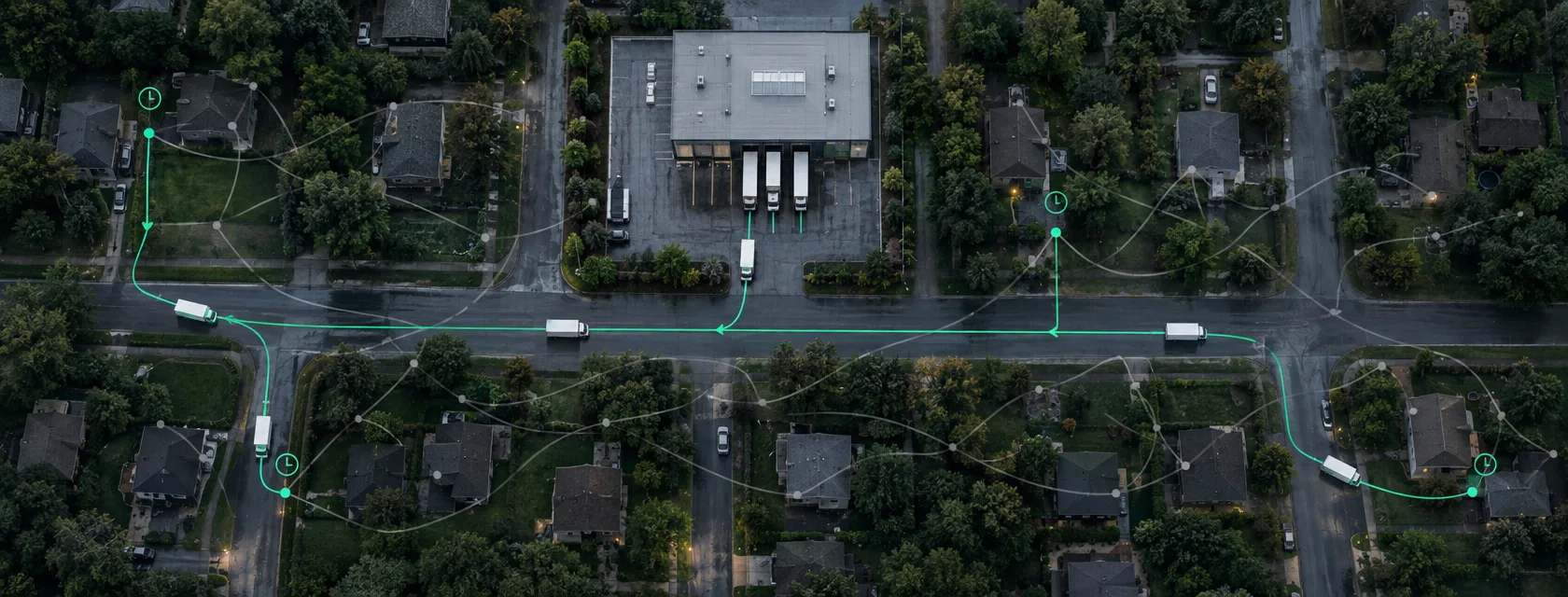
RaaS+ is NT’s routing desk working inside your rules. We build the morning plan, re-sequence when the day changes, and compare plan to actual so the mileage savings hold.
- Typical saving
- 8–9% fewer miles from re-sequencing
- Best single route
- 18.5%, 107 to 87 miles
- Fleet sizing
- 151 trucks modeled down to 130
- Your systems
- Keep your TMS and driver tools
What RaaS+ is, and isn’t
RaaS+ is route and fleet design with operators attached: people who plan your routes every day with optimization software and answer for the result. It isn’t a routing guide or a carrier-selection service.
How a day runs
- Build the plan. The morning routes, inside your delivery windows, appointments and hours-of-service limits.
- Handle exceptions. When orders change, we re-sequence only the routes that need it instead of rebuilding the day.
- Measure. Plan against actual, every day, so you can see where drivers left the plan and why.
- Tune. Coaching on adherence and adjustments to the plan, so drivers trust it and run it.
Results from the routing desk
| Route | As run | Re-sequenced | Change |
|---|---|---|---|
| Route one, 15 stops | 507 mi | 413 mi | −18.5% |
| Route two, 15 stops | 372 mi | 317 mi | −14.8% |
| Route three, 16 stops | 563 mi | 411 mi | −27.0% |
In a separate fleet-sizing study, scenario modeling showed a 151-unit fleet could run the same work on 130. In a make-or-buy study, the client’s own plans ran about 30% more miles per stop than NT’s, and route adherence started near 39%.
Common questions about RaaS+
Do we need new software?
No. You keep your TMS and driver tools. The desk plugs into what you already run.
How much can re-sequencing save?
Across the data sets we’ve studied, reordering stops inside the same windows typically takes out 8 to 9% of miles. Individual routes have dropped as much as 27%.
Why does stop order matter so much?
Five stops can be run in 120 different orders, and fifteen stops in more than a trillion. A worked example from Frisco shows one trip getting 18.5% shorter.
The math behind route sequencing, and why people still need to check it: Navigating Excellence →