Navigating Excellence
Maximizing efficiency through route sequence optimization. Why the order of the stops changes what a delivery costs, and what knowing that lets you do.
- Type
- White paper
- Published
- May 2024
- Read
- About 8 minutes
- Covers
- Routing, cost to serve
It’s complicated
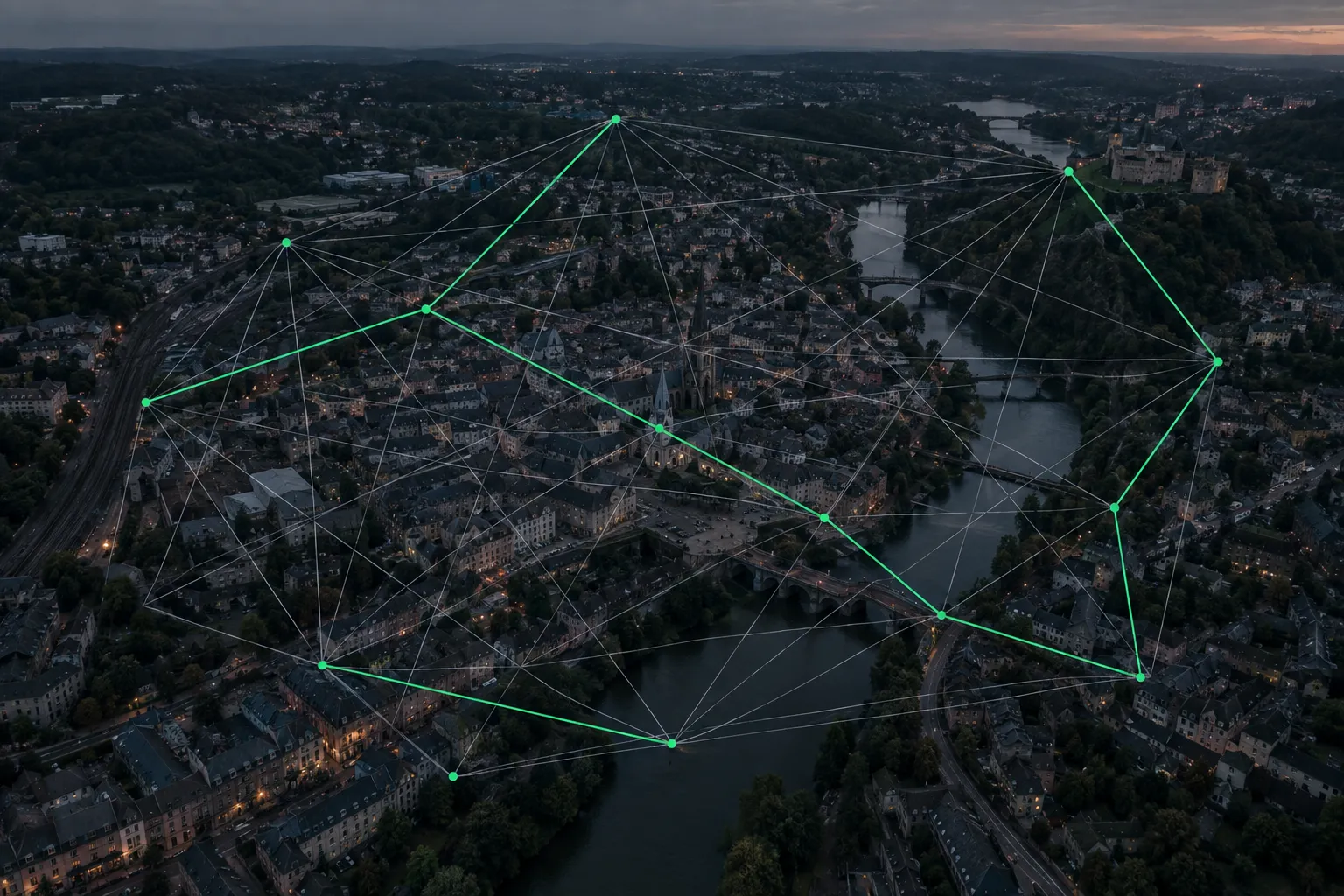
The shortest way between two points is an easy question. The shortest way through many points is one mathematicians have worked on for centuries. It’s known as the Traveling Salesman Problem, and the number of possible routes grows as a factorial. Five stops can be run 120 ways. Ten stops, 3.6 million. A fifteen-stop route has more than a trillion.
That is the puzzle a fleet manager at a small or mid-size company solves every morning, usually alone, while also juggling dwell time, driver hours, delivery windows and which customer matters most.
People and technology
Routing software takes your trucks, drivers and every relevant constraint and finds the best routes by time, miles or both. On its own, it can still tell you a truck can make ten warehouse deliveries in a day when dock delays make that impossible. The routes that work come from software checked by transportation people who know which answer can actually be driven.
Sequence matters
Reordering five stops around Dallas, with no other change, cut a trip from 106.9 miles to 87.1. That is 18.5% fewer miles, which means less fuel, less wear, and fewer drivers and trucks to cover the same work. See the worked example.
Cost per customer matters
Put a $100 sale on each of those five stops and price the time and miles, and one of them, Rockwall, loses $101 every time a truck goes there. Knowing that number is what lets you talk about minimum orders and pricing.
Customers will often make a small change if someone asks. One client found that moving a customer’s order cutoff from 6am to midnight the night before cut its operating cost by 15%, and the customer was happier with the service.
Scalability matters
Growing doesn’t have to mean buying trucks. A new truck costs $175,000 to $205,000 before insurance, maintenance and fuel. On one client’s data, routing gave three options:
- Resequence today’s orders and save about 8% of the miles
- Change order size or ship day and run 17% fewer miles on the same delivery schedule
- Add rules like order minimums and set delivery days, route daily, and run the work on 10 to 12 trucks instead of 14
Dwell time matters
Accurate dwell time shows where trucks sit waiting, and that changes behavior on both sides of the dock. It cuts idle fuel, makes schedules realistic, gives customers better delivery estimates, and lets you charge what serving a slow dock really costs.
The right partner matters
If you don’t have people in house to run routing software, the partner who does is handling something your customers feel every day. Trust there means confidence in their expertise and in how they work with your team, week in and week out.
Download the PDF PDF, 25 pages, 46 MB