Asset-based vs. non-asset-based 3PL: which fits your freight?
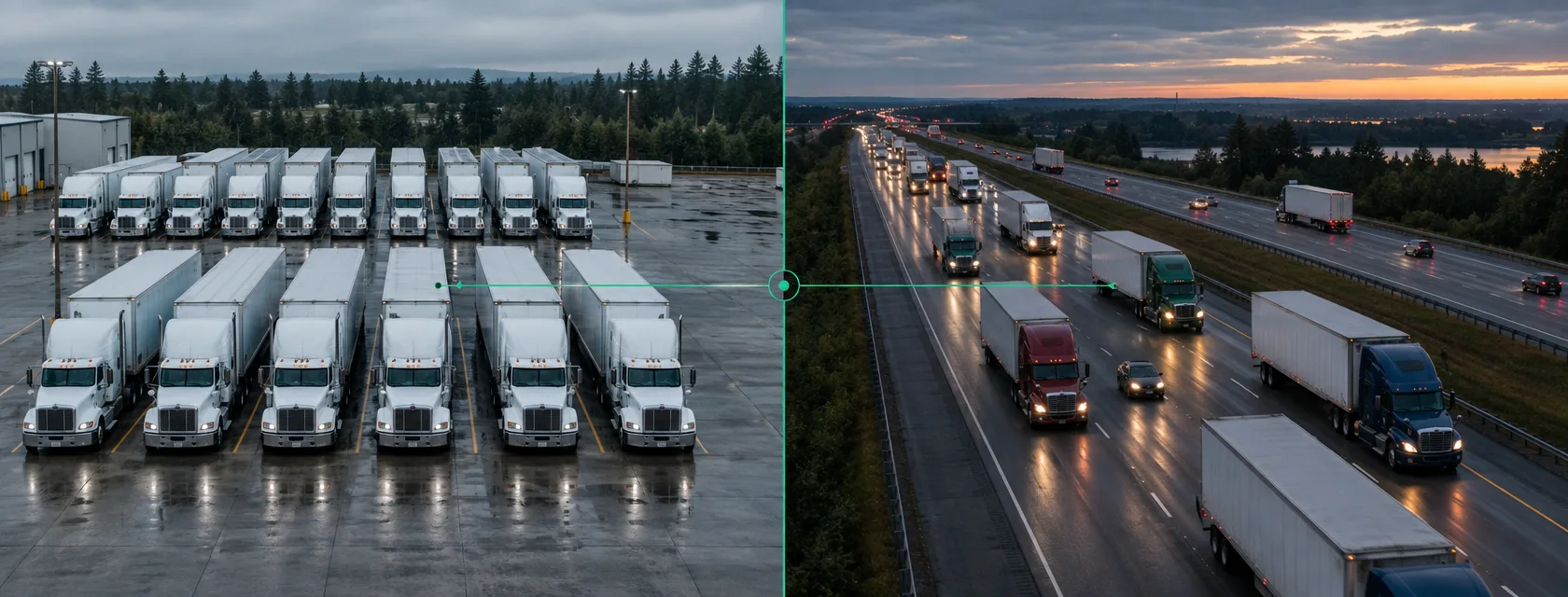
An asset-based 3PL owns its trucks and needs to keep them full. A non-asset-based 3PL owns no trucks and chooses a carrier for each load. Steady, dense lanes can favor the first. Seasonal, mixed or specialized freight usually favors the second. Lots of shippers use both.
- Asset-based
- Owns trucks and trailers
- Non-asset-based
- Contracts carriers, owns the plan
- Asset fits
- Steady, dense, predictable lanes
- NT
- Non-asset, with dedicated capacity when lanes call for it
How the two models compare
| Asset-based | Non-asset-based | |
|---|---|---|
| Who owns the trucks | The 3PL | Contracted carriers |
| What it has to optimize | Keeping its own fleet full | Your cost and service |
| Capacity in a tight market | Its own trucks first | As deep as its carrier network |
| Flexibility as volume shifts | Limited by fleet size | Scales up or down by load |
| Equipment range | What it owns | Dry, reefer, flatbed, rail, specialized |
| Best fit | Steady, dense lanes | Seasonal, mixed or specialized freight |
Where each one falls short
An asset-based provider controls its own trucks, which can mean dependable capacity on lanes it runs every day. The catch is the incentive. When its trucks sit empty, the pressure is to fill them, whether or not that’s the best answer for your freight.
A non-asset provider has no fleet to fill, so it can be neutral about which carrier or mode you use. But it’s only as good as its carrier relationships and the people running the desk.
Five questions to ask either kind
- Who decides which carrier or truck takes each load, and on what basis?
- Can you show cost per case or per pound by customer, or only cost per load?
- What happens to my freight when capacity gets tight?
- How are accessorials and detention tracked and passed through?
- What changed for your last three clients in their first year?
Where NT fits
NT is non-asset. We don’t own trucks, so we never have to fill them. Most freight runs through our carrier network. When a client’s freight is steady enough to keep committed trucks busy, we set up dedicated capacity, sized from their own order data.
Quick answers
Is a non-asset 3PL the same as a freight broker?
Not quite. Brokerage is one thing a non-asset 3PL does. A full 3PL also plans the network, manages dedicated capacity, audits freight bills and reports on cost.
Are asset-based 3PLs cheaper?
Sometimes, on lanes where their own trucks run full in both directions. Away from those lanes, a non-asset provider can usually find a carrier that fits better.
Can I use both?
Yes, and many shippers do: an asset carrier or dedicated fleet for the steady base, and a non-asset 3PL for everything else.