Buying more trucks can be an expensive way to solve the wrong problem.
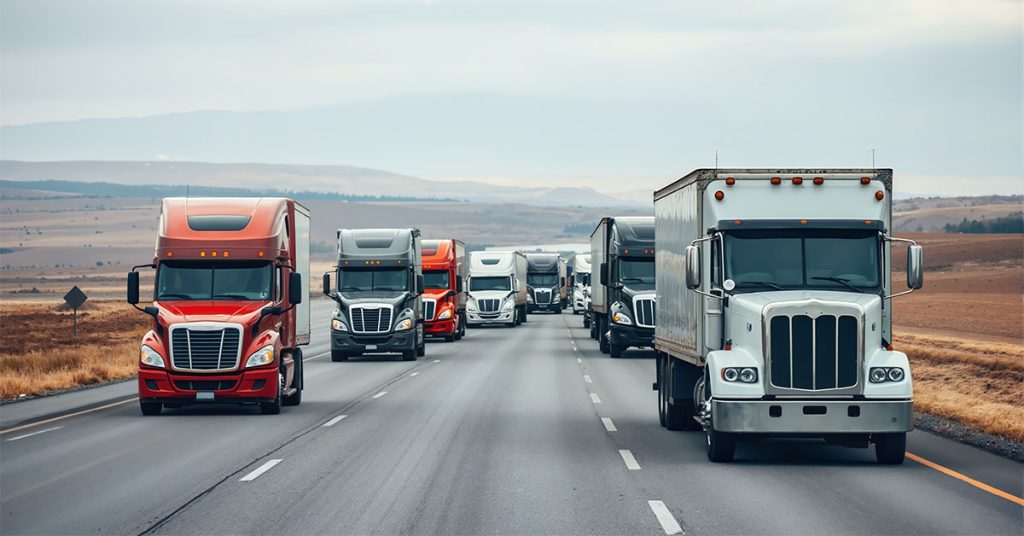
A recent Journal of Commerce article reported that 71% of surveyed shippers plan to expand their private fleets as fuel costs rise and for-hire capacity tightens.
The pressure is real. But before committing more capital to equipment, make sure your network, not your equipment, is the real constraint.
I bought my first truck in 1988. By the late 1990s, I had built a small fleet of fewer than 50 units and learned trucking mostly the hard way. I spent years trying to lower the cost of the assets: buy the equipment right, improve fuel mileage, control maintenance, and run every truck as efficiently as possible.
Those things matter. But when I moved into managed transportation for smaller food companies, I learned something bigger. There is often more meat on the network bone than in shaving a few more dollars off the cost of running a truck.
Diesel now averages $6.53 a gallon. At 6.5 mpg, that is roughly a dollar per mile in fuel alone. Every empty, underused, or unnecessary mile costs more than it did a year ago. That also means every network improvement is worth more.
Before buying more equipment, take a hard look at how you move inbound raw materials and outbound finished goods:
• Order minimums
• Delivery frequency
• Truck utilization
• Empty miles and backhauls
• Inbound and outbound coordination
• Customer ordering patterns
• Total landed cost and true cost to serve
A thorough analysis may reveal that your fully loaded transportation cost is not reflected in your pricing. It may also show that the real opportunity is not adding trucks, but changing how orders are placed, consolidated, and delivered.
Good data and deep analysis can identify savings. The real value comes when that analysis changes behavior, first inside your company and then with your customers. Share the savings, and most customers will happily order differently.
Private fleets provide capacity, control, and leverage. But equipment should support an efficient network, not compensate for an inefficient one.
Optimize the network first. Then decide how many trucks it actually needs.
Source: Journal of Commerce (subscription required).
US shippers boost private fleet use as trucking, fuel costs rise | Journal of Commerce (https://lnkd.in/gfqKD4a4)
Lynn Gravley

7460 Warren Parkway, Suite 301
Frisco, TX 75034
Toll-free: 800.801.5970
Dallas Area: 469.362.5000


Subscribe to our newsletter